Cognitive psychology has emerged as a key approach to analyzing how cognitive processes – such as perception, attention, memory, language, logical reasoning, decision-making, and learning – affect athletes’ behavior. Its aim is to optimize this behavior by identifying the cognitive processes – expressed through cognitive actions – involved in training and competition.
Psychomotor behavior in athletes is defined as the integration and coordination of cognitive, emotional, and motor processes, which manifest in a fluid and efficient manner to facilitate the execution of technical and tactical actions.
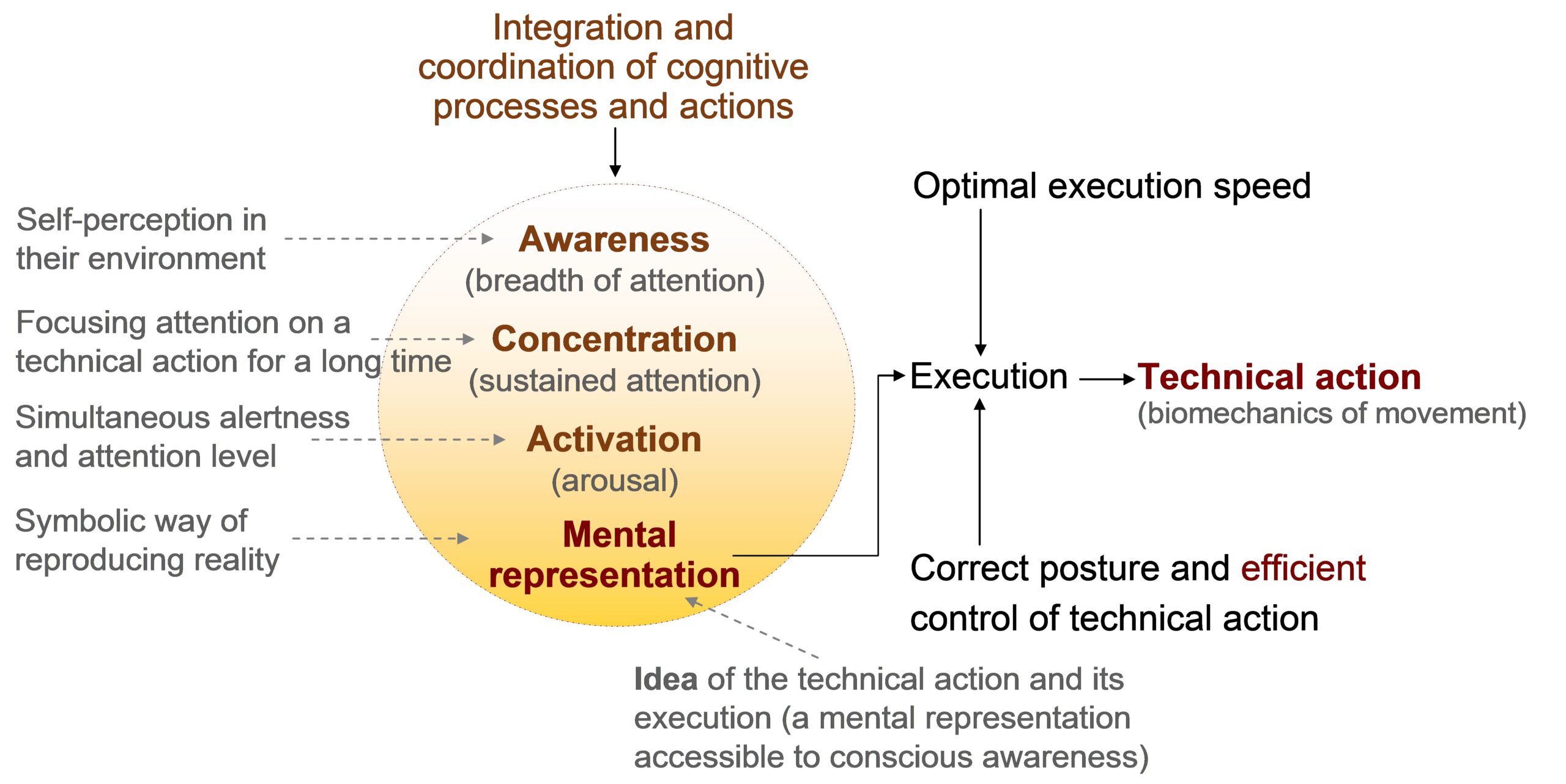
Concept map: Psychomotor behavior, based on the integration and coordination of cognitive processes and actions, is connected to the execution of the athlete’s technical actions.
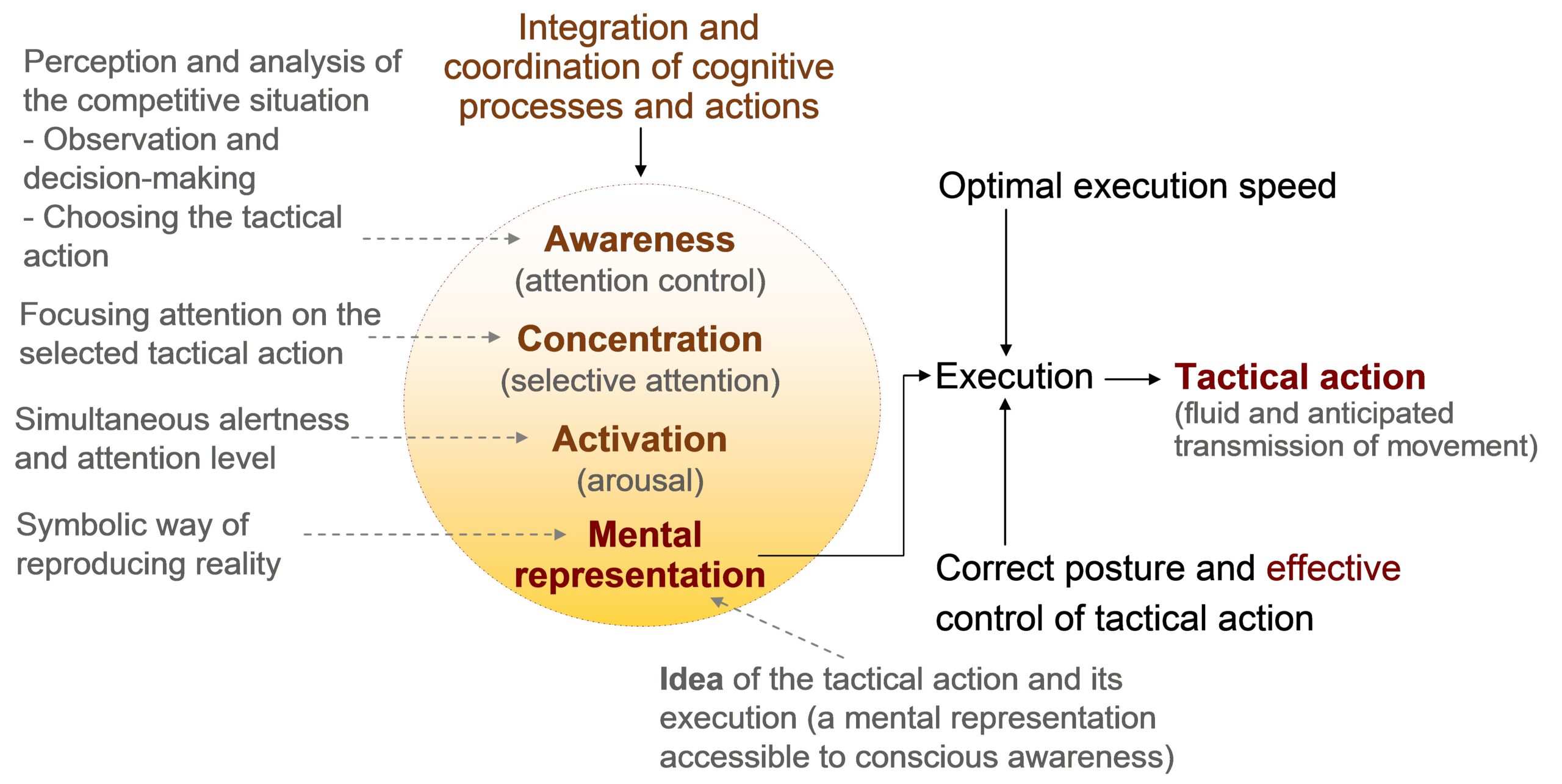
Concept map: Psychomotor behavior, based on the integration and coordination of cognitive processes and actions, is connected to the execution of the athlete’s tactical actions.
Awareness is defined as the psychological process through which an athlete perceives themselves and becomes immediately aware of their actions within their environment.
Concentration is defined as the athlete’s ability to direct and maintain sustained and/or selective attention during the execution of a sporting action, while ignoring internal and external stimuli that may interfere with performance.
Activation (arousal) is defined as a state of cortical excitability that allows for the simultaneous maintenance of alertness and attention in response to a stressful situation.
Mental representation is defined as an internal symbolic construction, such as a concept, image, idea, or schema that enables the athlete to recreate, simulate, or manipulate relevant aspects of reality, even in the absence of actual physical stimuli.
Mirallas, 2025